 01:43–01:55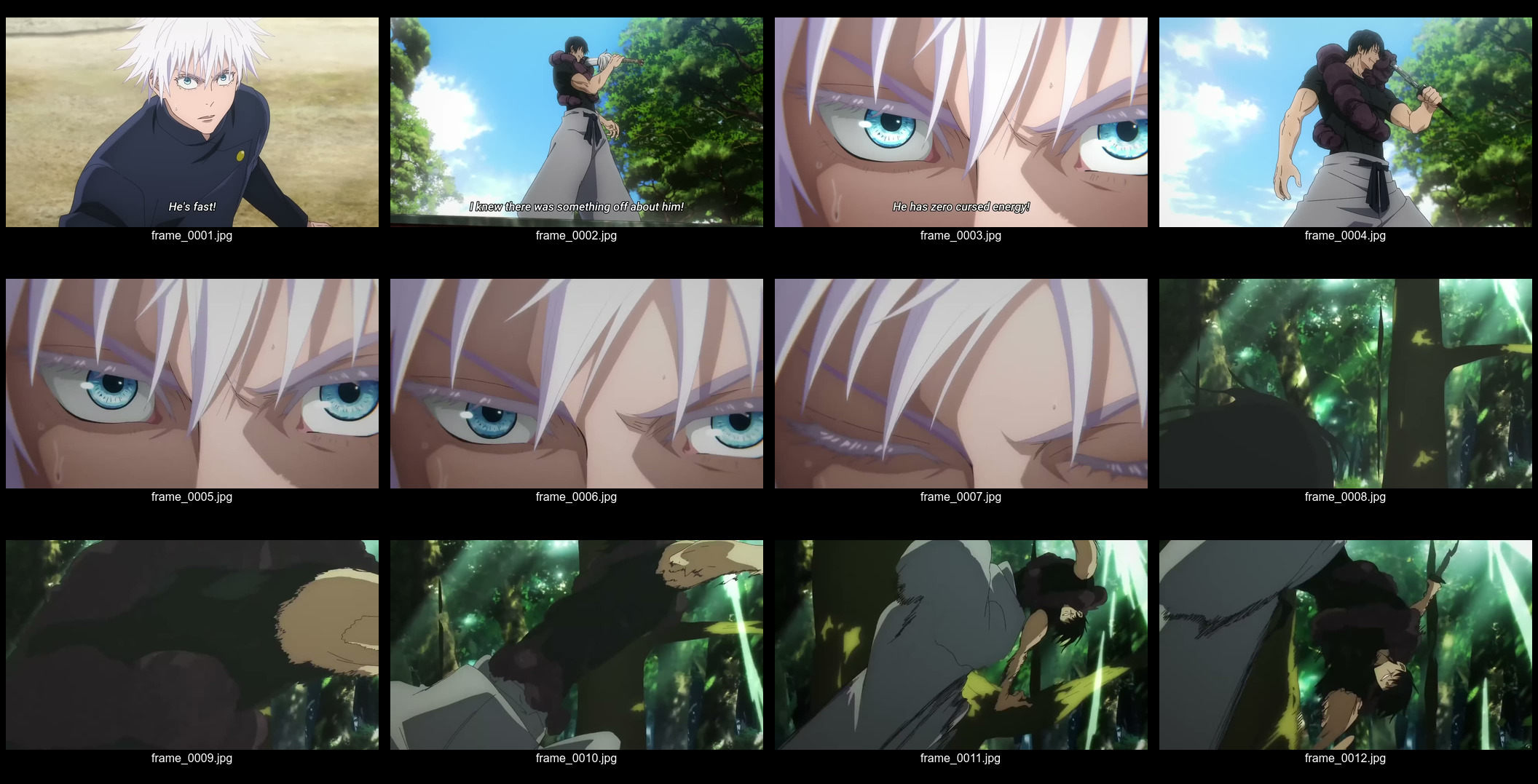
Personal working library
A tribute to art itself. The images and movement come first; interpretation stays quiet until it is deliberately opened.
7 references · Leo’s notes kept separate from AI close-reading01:43–01:55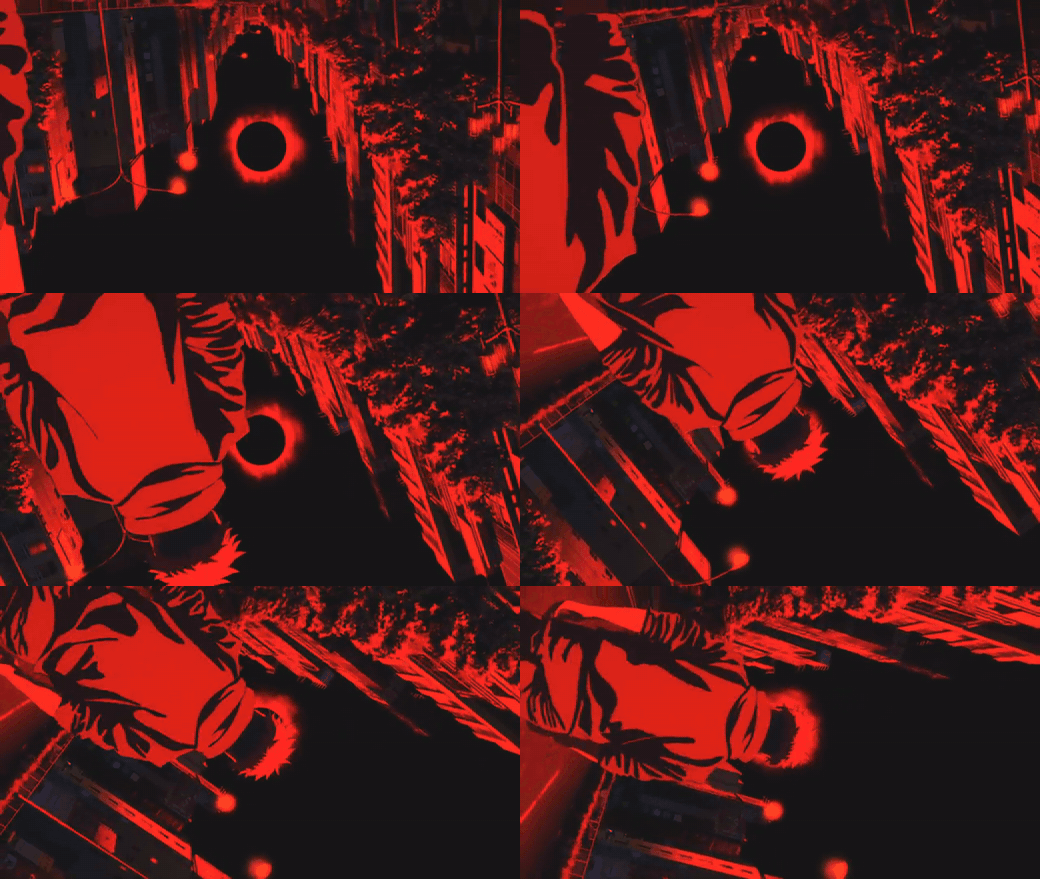 00:02–00:06
 01:02–01:06
 01:12–01:17
 02:33–03:02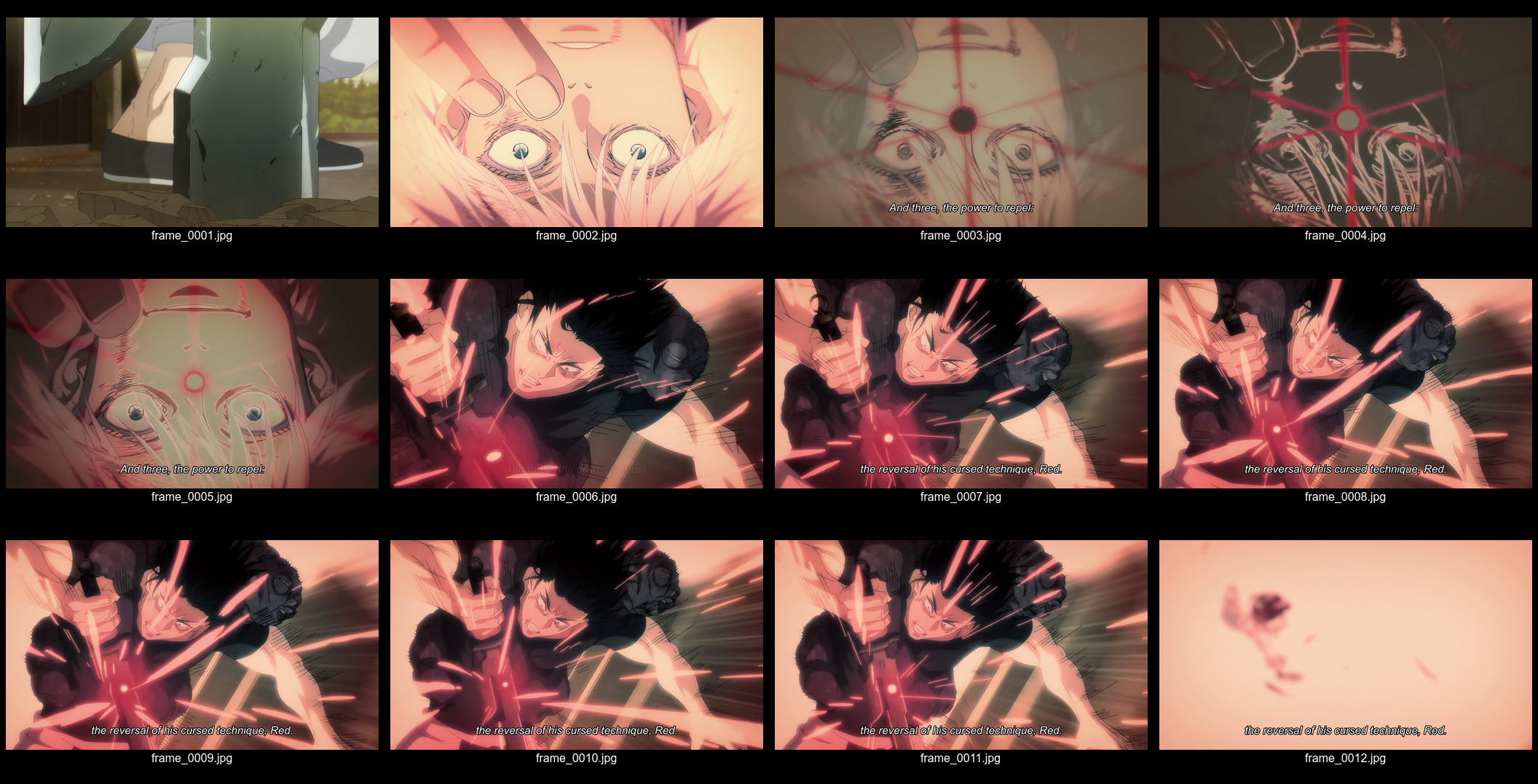
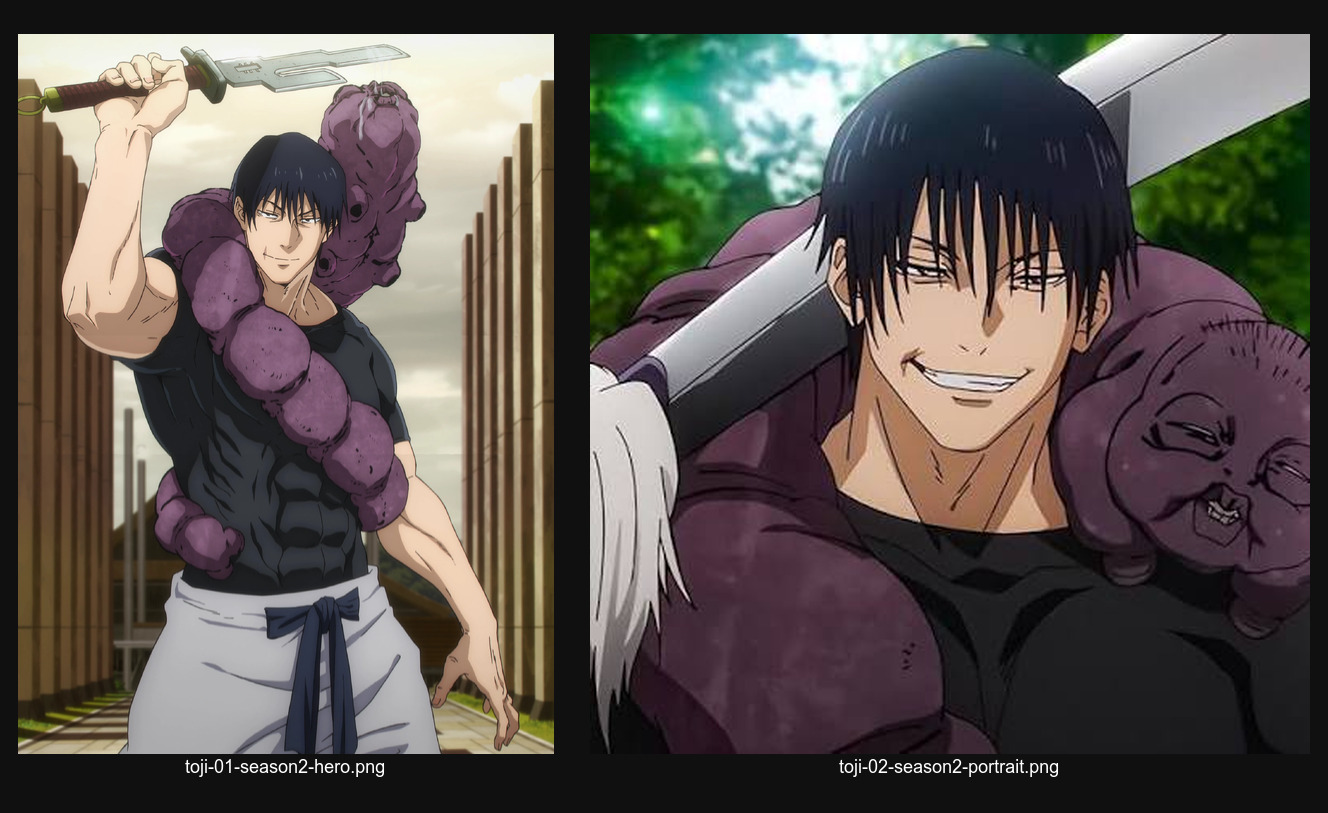
Separate context layer
Jujutsu Kaisen Season 2 · Gojo versus Toji, Round 1
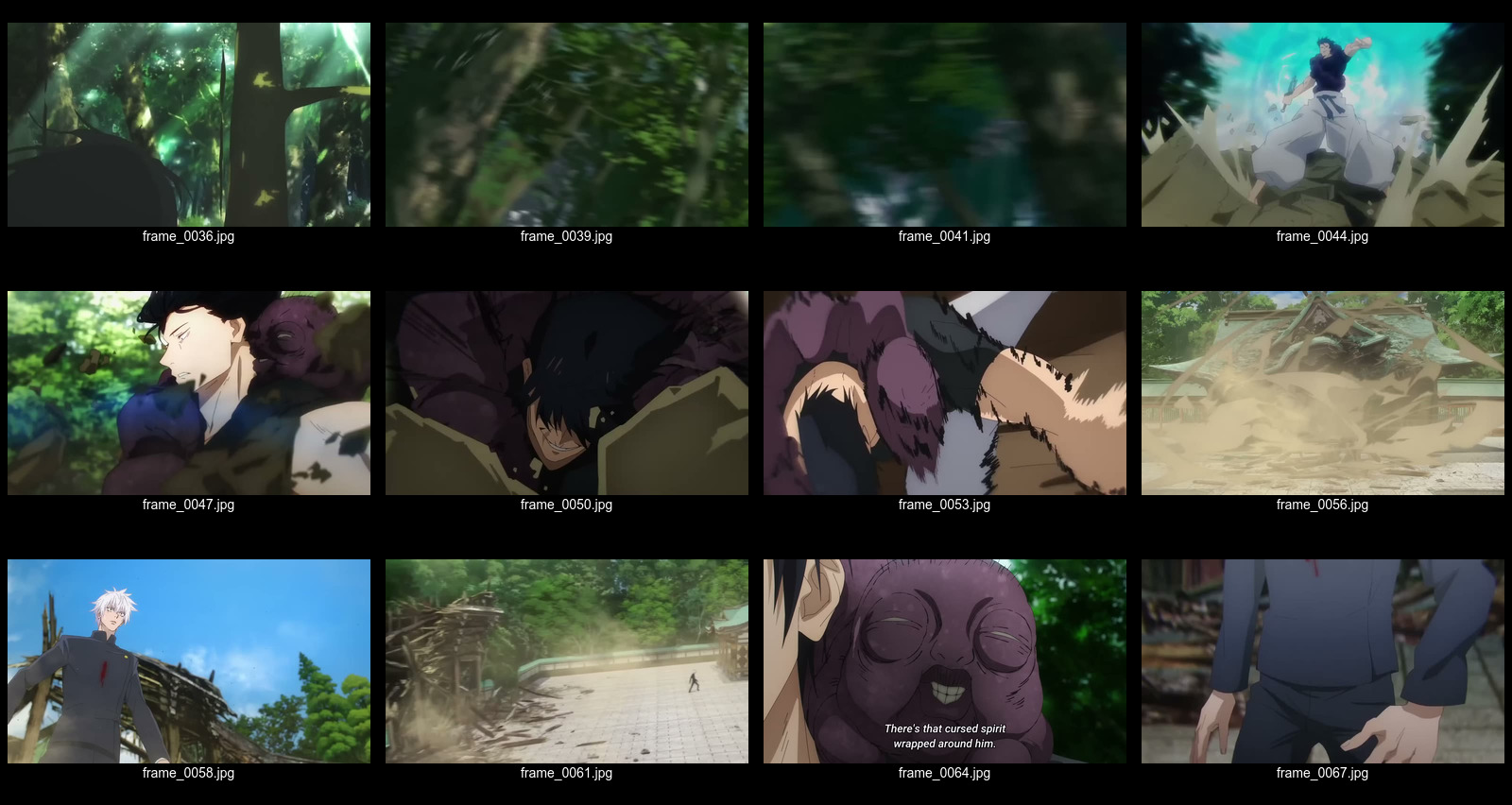
The Toji thing moving is the first time we actually see something that steals your attention. Around 1:40 is the dash, and it is also a really good forest reference.
The shot does not make Toji fast through blur alone. It gives the viewer a readable starting position, briefly loses the moving body, and then makes the destination land with force.
Map → read → lose → commit → receipt. Establish the geography, withhold the moving body for a beat, then prove speed with a sharp arrival and environmental consequence.
Do not imitate the exact camera path, pose sequence, cut order, music, dialogue, or source frames in production work.
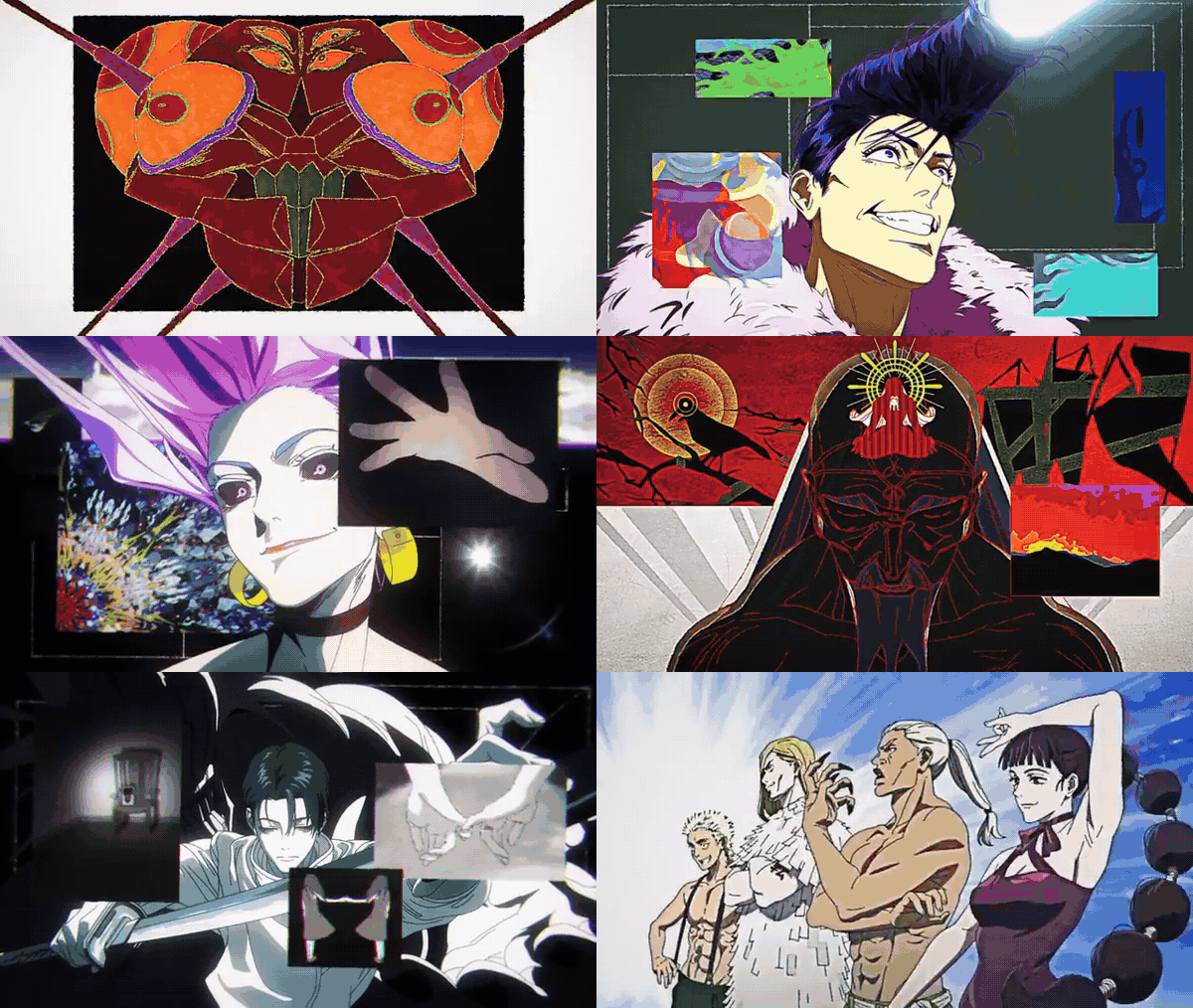
Jujutsu Kaisen Season 3 · creditless opening · TOHO animation
I’d want to put the whole JJK Season 3 opening in here. Beautiful design reference.
The official creditless upload gives the library a source-native sequence for studying visual density, abrupt scale changes, graphic transitions, character staging, and music-image rhythm without relying on a fan edit.
Treat density as authored compression. Each short image must introduce a distinct silhouette, direction, color state, or conceptual association so speed increases attention instead of turning into undifferentiated noise.
Do not translate rapid cutting into random montage. The opening is a study source; its frames, shot order, music, and transitions are not production assets.
Jujutsu Kaisen Season 2 · Gojo versus Toji, Round 2
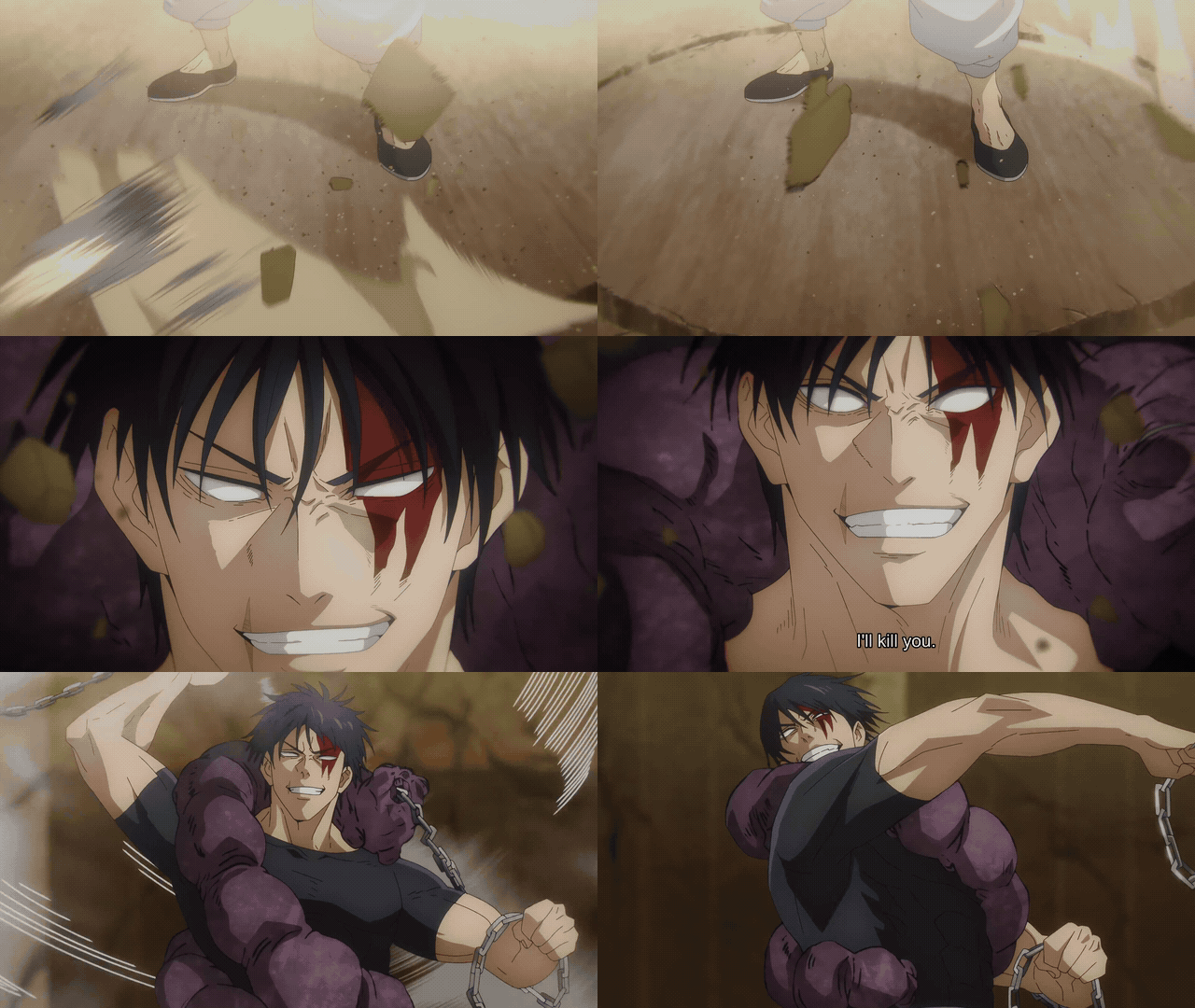
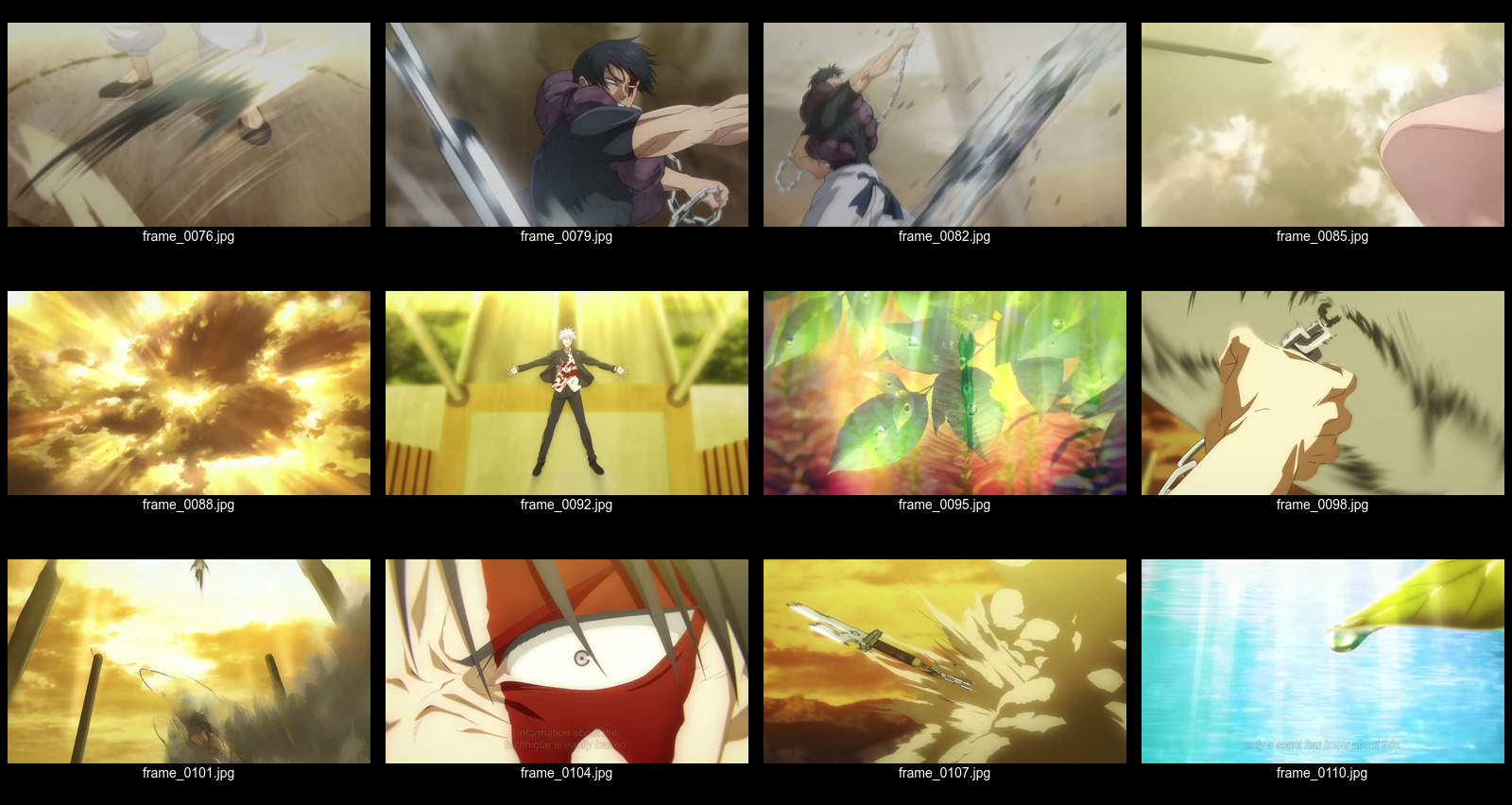
He uses the Chain of a Thousand Miles in the second reference, and I want it to be similar to that.
The chain reads because its attachment, slack, tension, attack volume, and recovery remain spatially connected to Toji instead of becoming a detached effect trail.
Treat a flexible weapon as a moving spatial system. Its arc should tell us where Toji is planted, what volume is dangerous, and how the next action becomes possible.
A random whip trail is not the move. Preserve the weapon's construction and screen geography before adding effects.
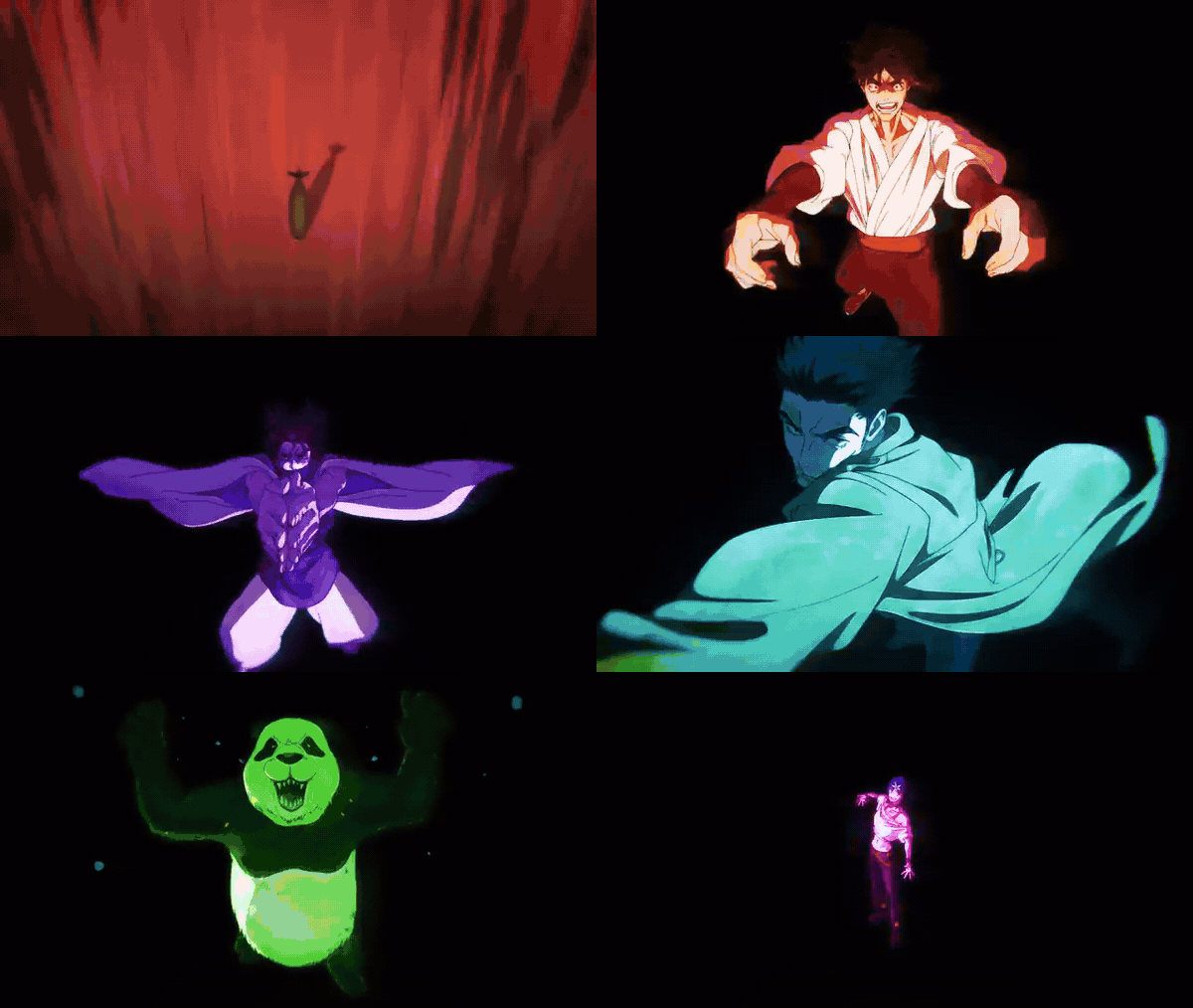
Jujutsu Kaisen Season 3 · Sendai Colony promotional video · TOHO animation
Sendai Colony movement and the Triple Domain Expansion are part of what I mean when I talk about Season 3 looking incredible.
This official forty-five-second source is useful as a compact motion shelf: it compresses pose, effects, camera displacement, scale changes, and color-state shifts into a bounded sequence that can be revisited shot by shot.
Escalate the visual grammar with the dramatic state. Camera proximity, line density, effects coverage, and abstraction should rise because the confrontation changes, not simply because the edit needs another impressive image.
A promotional cut can hide connective tissue. Do not infer complete fight geography or source-native episode cadence from the trailer alone.
Gojo versus Toji · composition atlas
The composition atlas is excellent because it contains information you would not otherwise have. We need to look at the angles they actually choose and how they play color off itself.
The atlas turns isolated attractive frames into sequence evidence: what the viewer knows before the cut, what the angle withholds, how status changes, and what visual receipt remains after contact.
Give every shot one dominant job: orientation, hierarchy, information, commitment, contact, or recovery. A beautiful frame only earns its place through the surrounding shots.
Low angles, Dutch tilts, close-ups, and freeze frames are not dynamic by themselves. Do not detach the pose from the sequence that gives it force.
One Piece · Gear 5 Luffy versus Kizaru · Toei Animation
Contemporary One Piece animation and Vincent Chansard’s expressive movement are major references. Luffy facing the three Admirals is a core image of impossible opposition, resolve, silhouette, and horn-led force.
This official current-era clip is an adjacent movement source, not the exact three-Admirals image. It lets us study how elastic shape change, camera motion, effects, and recovery poses keep extreme action readable.
Let anatomy deform around the force vector, then restore identity through a readable destination pose. Exaggeration works when the viewer can still track intention, direction, and consequence.
Do not confuse expressive deformation with uncontrolled model drift. The exact three-Admirals image and its sound relationship still need their own source entry.
Dragon Ball Super: Broly · official trailer · Toei Animation
Naohiro Shintani’s character direction is a named influence: expressive deformation, color, framing, atmosphere, silhouette, and movement.
The official trailer is a compact evidence source for a character system that stays unmistakable while line economy, facial construction, volume, color, and pose change aggressively with the moment.
Lock recognition around silhouette, face landmarks, costume masses, and movement attitude rather than one rigid turnaround. Expression can then widen without dissolving the character.
Do not use ‘on-model’ as an excuse for stiffness or ‘expressive’ as an excuse for accidental inconsistency. The production's exact drawings remain reference-only.